floormall-right-head-fade.png
 Home Floor Gallery  Customer Feedback  "Letter from the CEO"  Meet FloorMall Team Blowout Products Green Flooring!  How To Purchase  Terms & Policies  Privacy Policy  Contact Us
Search

Deep Product Search
Material Options

HACKER SAFE certified sites prevent over 99.9% of hacker crime.

Laminate Floor Installation

Laminate floors are meant to be floated over a variety of sub floors and never secured directly to any substrate. In other words, the laminate flooring just lays on top of the sub floor, which can be wood, concrete, or an existing floor. This allows the laminate flooring to expand and contract freely as the room environment changes.

Laminate floors come in planks and squares of various sizes and shapes. All four sides of each plank have a tongue and grooved edge for locking them together. A properly completed laminate floor installation will prove both long lasting and durable.

Advances in Laminate Floors

Many brands of laminate floors no longer require specials glues at the tongue and groove joints. Many laminate floors now have a variety of special glueless locking systems which makes laminate flooring installation much less complicated for flooring professionals and DIY installers. Some laminate floor products also have glue pre-applied along the tongue. This kind of glue is activated when the tongue is dampened using a sponge. Many of the better grade laminate floors have all edges pre-sealed at the factory to help prevent moisture from gaining a foothold in the engineered structure that makes up the laminate flooring.

Preparing for Laminate Flooring Installation

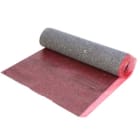
Special polyurethane underlay is laid down prior to installing laminate flooring. The underlay allows the floor to float freely over the top. Some more expensive underlayments are available for reducing sound transmissions and restricting moisture from wicking up. These underlayments are a pad with a plastic coating to keep moisture from touching the laminate flooring. Make sure you have some tape on hand to arrange and immobilize the padding before proceeding with the laminate floor installation.

Laminate Floor Installation Process

Installation is done similar to hardwood flooring. Once you have the first row layed along the length of the room, start the next row with 1/3 of a given plank to create a staggered pattern of laminate floor planks in each subsequent row. It may also be helpful to lay several rows first so that the row closest to the wall is farthest across the length of the room and squaring up the rows with the room. Keep the laminate flooring in the room prior to installation to make the installation easier and to avoid planks bowing and cupping.

Glueless Laminate Flooring Installation

Most laminate flooring manufacturers today offer glueless laminate floors. These floors do not require any glue to lock the planks together and are often referred too as "clic-floors". The tongue and grooves are specially designed to lock together and not be loosened by regular foot traffic. Be sure to read the manufacturer's recommended installation procedures before installing. The subfloor needs to be as flat and level as possible in order for the planks to easily lock together and remain locked throughout the installation.

Glued Laminate Floor Installation Necessities

Below is a general outline of the various tools used to install glued laminate flooring. Always follow the manufacturer′s installation instructions and use the manufacturer′s recommended installation tools.

Tapping Block - Tapping blocks are used to lightly tap two planks together. Most blocks are designed to fit a specific manufacturers tongue and groove design.

Pulling Bar - A Pulling bar is used to help pull two pieces of laminate together. Care must be used with these bars so as to not chip the surface of the laminate floor plank.

Spacers or Wedges - the V-shaped wedges are used to insure a minimum gap is left between the laminate floor and all vertical walls. Consult the manufacturer′s installation recommendations for required gap distances.

Glue - Some laminate floors require a special glue to secure the planks together and help seal moisture from penetrating the core. This can also be used if the floor is installed in a kitchen or bathroom as added protection even for laminate flooring that doesn′t require glue.

Fillers & Sealants - Some laminate flooring manufacturers also offer color coordinating fillers and sealants. The colored fillers are to fix seam gaps between planks and the sealant is used around the perimeter where moisture may enter.

Straps - Straps work much better than clamps at pulling plank rows together. Normally you need a strap set for every four feet in the starter rows. Many laminate floor installation can be completed without straps or clamps.

Velaro Live Help
cart preview graphic, top right
Shopping
Cart


Your cart is Empty
google groups

Hardwood      Laminates      Bamboo      Cork      Area Rugs      Tiles      Vinyl      Carpets      Links      Sitemap RSS 2.0 Feed Graphic